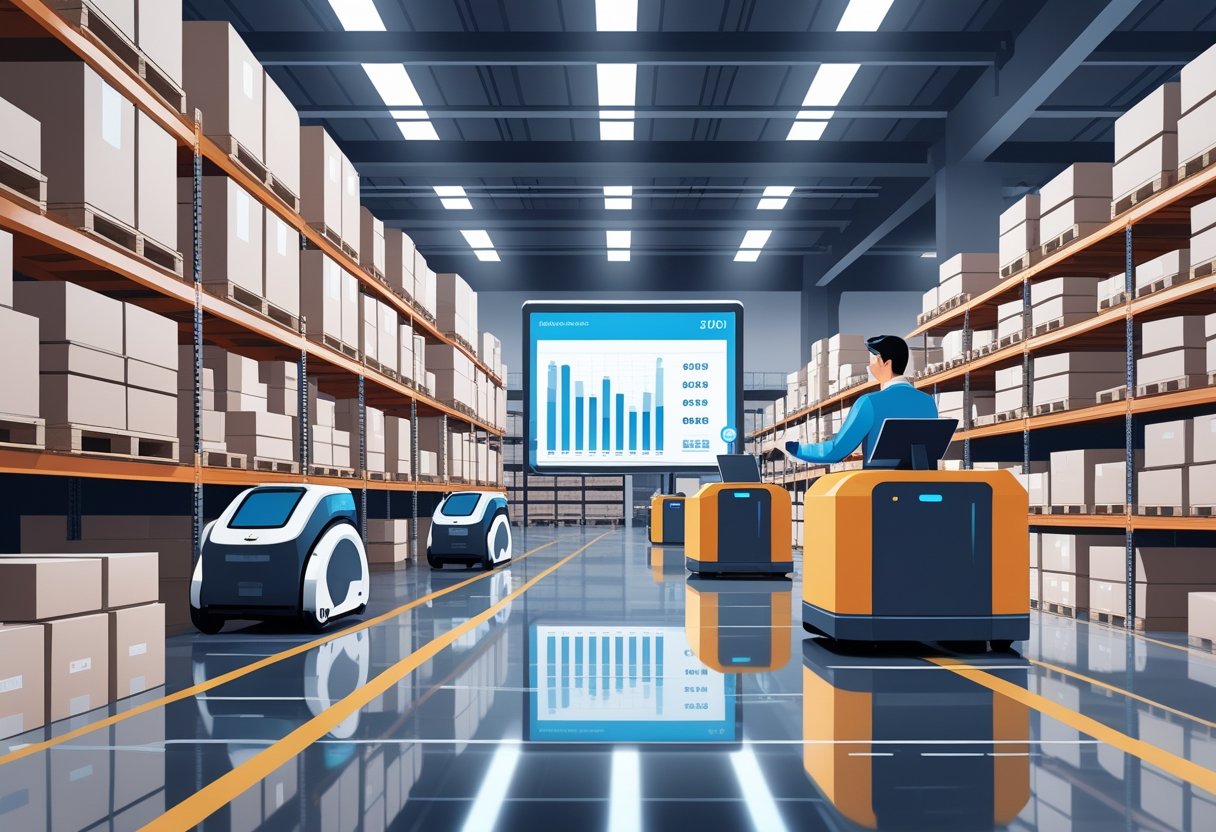
Your inventory isn't just stuff on a shelf; it's cash waiting to be unlocked. But for many growing brands, it feels more like cash trapped in a box. Overstocking ties up capital that could be used for marketing or R&D, while stockouts mean leaving sales on the table. This delicate balance is where your profit margins are won or lost. Effective manufacturing inventory management is the discipline of turning your physical goods into a predictable financial asset. It’s about knowing the true cost and profitability of every single SKU, so you can make smarter decisions about purchasing, production, and pricing to protect your bottom line.
For many physical goods brands, inventory data feels scattered and disconnected. Your sales platform has one set of numbers, your accounting software has another, and your warehouse team is working off a third. This lack of a single source of truth makes it impossible to get a clear, accurate picture of your business's health. Modern manufacturing inventory management is designed to solve this exact problem. By centralizing your operations and finance around your SKUs, you can move beyond simple tracking and gain real-time, actionable intelligence. This guide will explore how the right software can automate tedious workflows, provide granular visibility into your costs and revenue, and ultimately give you the control you need to protect your margins and scale with confidence.
Key takeaways
- Go beyond counting to control your bottom line: Effective inventory management directly impacts your cash flow and production efficiency by preventing costly overstocking and sales-killing stockouts.
- Demand more from your software than just a stock count: The right platform provides real-time, SKU-level visibility and automates complex financial workflows, turning your inventory data into a clear guide for profitability.
- Choose and implement software with a clear strategy: Select a scalable solution that solves your specific problems, and ensure a smooth transition by dedicating time to clean data migration and proper team training.
What is manufacturing inventory management?
At its core, manufacturing inventory management is the system you use to track and control all the physical goods that move through your business. It’s about overseeing every single item, from the basic raw materials you start with to the finished products you ship to customers. This process involves several key activities: forecasting what you’ll need, ordering materials, receiving and storing them correctly, and auditing your stock to ensure your records match what’s actually on the shelves.
Think of it as the central nervous system of your production line. When it’s working well, you have exactly what you need, right when you need it. This prevents costly delays and keeps your operations running smoothly. A solid inventory management strategy is the foundation for an efficient supply chain, helping you avoid the headaches of both stockouts and overstocking. It’s not just about counting boxes; it’s about creating a strategic flow of goods that supports your production goals and protects your bottom line. By getting a handle on your inventory, you gain control over your costs, production timelines, and ability to deliver for your customers.
The different types of manufacturing inventory
To manage your inventory effectively, you first need to understand what you’re working with. Manufacturers typically juggle four main types of stock, and each one plays a different role in your production cycle.
- Raw Materials: These are the basic, unprocessed items you use to create your products. If you’re a furniture maker, this would be your lumber, screws, and varnish.
- Work-in-Progress (WIP): This category includes all the partially assembled products currently on your production floor. For that same furniture maker, WIP inventory would be a chair frame that hasn’t been sanded or upholstered yet.
- Finished Goods: These are the final products, fully assembled and ready to be sold. Think of a completed, packaged armchair waiting to be shipped.
- Maintenance, Repair, and Operations (MRO): These are the supporting items that keep your facility running but aren’t part of the final product, like machine lubricants, safety gloves, and spare parts for equipment.
Core components of inventory management
Good inventory management helps you strike a delicate balance to avoid two major pitfalls: stockouts and overstocking. Running out of key material can bring production to a grinding halt and lead to missed deadlines, while having too much inventory ties up your cash, eats up valuable warehouse space, and increases the risk of waste if items expire or become obsolete.
The key to avoiding these problems is organization. This starts with a well-planned warehouse layout where everything has a designated spot. It also means assigning a unique stock keeping unit (SKU) to every single item for precise identification. From there, clear labeling and a system for recording every item’s movement, from receiving to production to shipping. are essential for maintaining an accurate, real-time picture of your inventory.
Think of inventory management as the central nervous system of your manufacturing business. It’s not just about counting what’s on your shelves; it’s the system that dictates your financial health, your production speed, and your relationship with your customers.
Discrete vs. process manufacturing
The way you make your products fundamentally shapes how you manage your inventory. Most physical goods brands fall into one of two categories: discrete or process manufacturing. Think of discrete manufacturing as building with LEGOs—you take distinct, countable parts and assemble them into a final product. This applies to businesses making anything from furniture and electronics to apparel. Your inventory consists of individual components, sub-assemblies, and finished units. Each piece can be tracked separately, and if you make a mistake, you can often disassemble the product and replace a part.
Process manufacturing, on the other hand, is more like baking a cake. You follow a recipe, mixing ingredients that undergo a chemical change and cannot be separated back into their original forms. This method is common for products like food and beverages, cosmetics, pharmaceuticals, and chemicals. Inventory is often managed in batches or lots, with a strong focus on traceability and expiration dates. Understanding which type of manufacturing your business uses is the first step toward choosing the right inventory management tools and strategies for your specific needs.
Key software systems: MRP and WMS
To handle the complexities of production, most manufacturers rely on specialized software. A Material Requirements Planning (MRP) system acts as the strategic brain of your operation. It looks at your sales orders and demand forecasts to determine exactly what raw materials you need, how many to order, and when they need to arrive to keep production on schedule. An MRP helps you avoid both shortages that can halt your assembly line and excess stock that ties up cash. It’s the tool that translates customer demand into a concrete purchasing and production plan.
While the MRP handles the planning, a Warehouse Management System (WMS) manages the physical execution. Think of the WMS as the muscle that directs the flow of goods within your four walls. It optimizes everything from receiving and putaway to picking, packing, and shipping. A good WMS provides real-time visibility into stock locations, improves order accuracy, and increases labor efficiency by directing your team on the most effective routes through the warehouse. It ensures that the inventory data in your system perfectly matches the physical reality on your shelves.
The challenge is that MRP and WMS often operate as separate systems, creating a disconnect between your operational plans and your financial reality. This is where a modern, AI-native ERP can make a huge difference. A platform like Mandrel unifies these functions, connecting your production planning and warehouse activities directly to your financials. By centering everything around the SKU, it ensures that every material movement is automatically translated into accurate, real-time data on revenue, landed costs, and margins. This gives you a single source of truth, allowing both your operations and finance teams to work from the same playbook.
Why does manufacturing inventory management matter?
Think of inventory management as the central nervous system of your manufacturing business. It’s not just about counting what’s on your shelves; it’s the system that dictates your financial health, your production speed, and your relationship with your customers. When it’s running smoothly, you can make smart, proactive decisions that fuel growth. But when it’s off, the entire operation can feel the strain, leading to wasted money, production bottlenecks, and frustrated customers.
Getting a handle on your inventory is fundamental to building a resilient and profitable business. It’s the difference between guessing what you need and knowing what you need. This knowledge touches every part of your company, from the finance team trying to manage cash flow to the production team keeping the lines moving and the sales team making promises they can keep. A solid inventory strategy provides the data-driven foundation for everything else you do. Let’s break down the three biggest reasons why mastering your manufacturing inventory is non-negotiable.
Control costs and improve cash flow
Effective inventory management is one of the most direct ways to protect your bottom line. It helps you find the sweet spot between two expensive problems: having too much stock and not having enough. Overstocking ties up your cash in products that aren’t selling, driving up inventory carrying costs through storage fees, insurance, and potential waste if items expire or become obsolete.
On the flip side, stockouts can be just as damaging. Running out of a critical raw material can bring your entire production line to a halt, leading to costly downtime and delayed orders. Running out of a finished product means you can’t meet customer demand, resulting in lost sales and potentially losing that customer for good. By optimizing your inventory levels, you ensure capital is working for you, not just sitting on a shelf.
Streamline production efficiency
Your production line is only as efficient as the supply of materials feeding it. Manufacturing inventory management is the process of overseeing the entire flow of physical assets. from raw materials and components to works-in-progress (WIP) and finished goods. When you have clear, real-time visibility into what you have and where it is, you can prevent the small delays that create major bottlenecks.
Imagine your team never has to waste time searching for a specific component or pausing work because a necessary material wasn't reordered in time. That’s the power of a streamlined system. It ensures your production planning is based on accurate data, making the entire manufacturing process smoother, faster, and less wasteful.
Keep your customers happy
Ultimately, every product you make is destined for a customer, and your inventory practices directly impact their experience. Good management ensures you can meet demand and fulfill orders accurately and on time. Nothing damages a brand’s reputation faster than consistently missing shipping dates or canceling orders because of stock issues.
Beyond fulfillment, solid inventory control also plays a role in quality. By tracking batches of raw materials and components from arrival to final assembly, you can quickly identify and isolate any issues. This traceability is crucial for handling recalls or addressing quality concerns, showing your customers that you’re committed to providing a reliable and safe product. A smooth supply chain leads to a better customer experience, which is key to building loyalty and earning repeat business.
Common inventory management methods and techniques
Once you have a handle on the basics, you can start exploring more advanced strategies for optimizing your stock. There isn’t a single “best” method; the right approach often involves a mix of techniques tailored to your specific products, sales cycle, and supply chain. The goal of each of these methods is to help you make smarter, data-driven decisions about how much inventory to hold and when to order more. By understanding these common frameworks, you can build a more resilient and efficient system that minimizes costs while maximizing your ability to meet customer demand.
Just-in-Time (JIT)
The Just-in-Time (JIT) method is all about efficiency and minimizing waste. As its name suggests, it’s a strategy that aims to reduce inventory carrying costs by receiving goods only as they are needed in the production process, thereby minimizing inventory levels. Instead of holding large amounts of raw materials or finished goods in a warehouse, you coordinate with suppliers to have items arrive exactly when you’re ready to use them. While JIT can dramatically lower storage costs and reduce the risk of inventory becoming obsolete, it requires a highly reliable and predictable supply chain. Any disruption—a delayed shipment or a supplier issue—can halt production entirely, making it a higher-risk strategy for some businesses.
Economic Order Quantity (EOQ)
Economic Order Quantity (EOQ) is a formula used to determine the optimal order quantity that minimizes total inventory costs, including ordering and holding costs. In simpler terms, it helps you find the perfect reorder amount to avoid spending too much on frequent, small orders (which drives up ordering costs) or on infrequent, large orders (which drives up storage costs). The formula balances these two competing expenses to find the most cost-effective middle ground. While the calculation itself can be complex, the principle is straightforward: order the right amount at the right time to keep costs low. Modern inventory systems can automate these calculations, using your sales data to recommend ideal order sizes.
ABC analysis
ABC analysis is a method of categorizing inventory into three classes (A, B, and C) based on their importance, allowing you to prioritize your management efforts. This technique is based on the Pareto principle, which suggests that roughly 80% of the effects come from 20% of the causes. In inventory, this means your "A" items are the small number of high-value products that account for the majority of your revenue. "B" items are moderately important, and "C" items are the high-volume, low-value products. By segmenting your inventory this way, you can focus your tightest controls and most frequent monitoring on the "A" items that have the biggest impact on your bottom line.
Safety stock and cycle counting
These two techniques work together to protect you from stockouts and maintain accuracy. Safety stock is the extra inventory you keep on hand to prevent stockouts during unexpected demand spikes or supply chain delays. It’s your buffer against uncertainty. Meanwhile, cycle counting is a method of auditing inventory by counting a small portion of the stock on a regular basis, rather than doing one massive physical count a year. This continuous process helps you catch discrepancies early, maintain more accurate inventory records over time, and avoid the operational disruption of a full shutdown for a manual count.
Lean manufacturing principles
Lean manufacturing principles focus on minimizing waste within manufacturing systems while simultaneously maximizing productivity. In the context of inventory, "waste" refers to anything that doesn't add value for the customer, and excess inventory is one of the biggest culprits. Holding more stock than you need ties up cash, takes up space, and risks obsolescence. Lean inventory management is about creating a streamlined flow of materials that supports production without creating unnecessary surplus. Techniques like JIT are direct applications of lean principles, all aimed at making your operation more agile, efficient, and responsive to customer needs.
How inventory fits into the product manufacturing lifecycle
Inventory management isn’t an isolated activity that only happens within the four walls of your warehouse. It’s a critical thread that runs through the entire lifecycle of your product, from the earliest design sketches to the final delivery to a customer. The decisions you make about materials, suppliers, and production partners at the very beginning will have a lasting impact on your inventory costs, efficiency, and ability to scale. Thinking about inventory strategically at every stage helps you build a more resilient and profitable operation from the ground up, preventing costly problems before they even start.
From product design to full-scale production
Effective inventory management is crucial from the initial product design phase through to full-scale production, ensuring that the right materials are available at the right time. When you’re designing a new product, you’re also designing its supply chain. The components and raw materials you choose will determine your potential suppliers, lead times, and costs. Sourcing a hard-to-find material might create a unique product, but it could also lead to inventory bottlenecks down the road. Planning for these factors early allows you to build a bill of materials (BOM) that is not only functional but also manufacturable at scale.
Choosing a manufacturing partner
Selecting the right manufacturing partner is essential for ensuring that their inventory management practices align with your production goals and quality standards. When vetting potential partners, don’t just look at their price per unit. Ask about their systems for tracking raw materials and work-in-progress inventory. How do they handle quality control for incoming components? Can they provide you with the data you need to maintain visibility into your stock, even when it’s in their facility? Your manufacturer is a key part of your inventory ecosystem, and their efficiency and transparency will directly affect your ability to manage your supply chain effectively.
Legal protections and contract terms
Establishing clear legal protections and contract terms with manufacturing partners is vital to safeguard your intellectual property and ensure compliance with quality and delivery standards. Your contract should explicitly define who owns the inventory at every stage of the process—from the raw materials they order on your behalf to the finished goods waiting to be shipped. It should also outline liability for any lost, damaged, or defective stock. Clear terms regarding lead times, quality assurance protocols, and acceptance criteria for finished goods will protect your business and ensure your partner is held accountable for their role in managing your valuable inventory.
Must-have features in manufacturing inventory software
Choosing the right inventory software is less about finding a digital ledger and more about selecting a central nervous system for your entire operation. The best systems don't just count what you have; they provide the intelligence you need to make smarter decisions about purchasing, production, and sales. When you’re evaluating options, think beyond basic tracking. Look for a platform that can grow with you, integrate with your other essential tools, and turn raw data into clear, actionable insights.
Modern inventory management software should connect every part of your business, from the warehouse floor to the finance department. It should automate tedious manual tasks, reduce human error, and give you a real-time, granular view of your business health. The goal is to find a solution that provides a single source of truth, ensuring everyone is working from the same, up-to-the-minute information. An AI-native ERP built for physical goods can centralize your operations and finance around your SKUs, giving you the end-to-end visibility needed for efficient growth.
✓ Real-time, SKU-level tracking
Knowing what you have on hand is fundamental, but knowing it in real-time, down to the specific Stock Keeping Unit (SKU), is a game-changer. This level of detail is non-negotiable for CPG brands managing multiple product variations, colors, sizes, or batch numbers. Real-time, SKU-level tracking means you can see the precise location and quantity of every single item, whether it’s raw material or finished goods. Digital tools with barcodes "automate tracking, reduce errors, and give you real-time updates." This accuracy prevents you from selling out-of-stock items and helps you understand which specific product variants are your top performers, allowing for much smarter inventory planning.
BLOG: An intro to SKU-level economics
✓ AI-powered forecasting
Guesswork has no place in modern inventory management. Instead of relying solely on past sales data, leading software now uses artificial intelligence to create highly accurate demand forecasts. AI algorithms can analyze complex variables like market trends, seasonality, promotional impacts, and even external economic factors to predict what your customers will want to buy next. This proactive approach helps you optimize production schedules and purchasing decisions, minimizing the risk of both overstocking and stockouts. As experts note, "AI plays a key role in improving the Perfect Order Rate... by increasing accuracy." This means you’ll have the right products ready at the right time, keeping your customers happy and your cash flow healthy.
✓ Seamless integration capabilities
Your inventory software shouldn't operate in a silo. To get the most value, it needs to connect seamlessly with the other platforms you rely on every day. This includes your ecommerce platform (like Shopify), your accounting software (like QuickBooks), and your CRM. A well-integrated system creates a unified command center for your business, eliminating the need for manual data entry and reducing the chance of costly errors. When your inventory system can communicate with other business functions like sales and finance, you ensure that data flows freely across departments. This creates a single, reliable source of truth that everyone in the company can trust.
✓ Automated financial workflows
Your inventory is one of your biggest assets, and managing it properly is critical to your financial health. Top-tier inventory software moves beyond simple stock counts and automates complex financial processes. Look for features that can automatically calculate your Cost of Goods Sold (COGS) and allocate landed costs. like shipping, tariffs, and insurance. down to the individual SKU. This gives you a true understanding of your product-level profitability. Automating these workflows not only saves your finance team countless hours but also ensures your books are accurate, GAAP-compliant, and always ready for an audit.
✓ Barcode and RFID support
Manual inventory counts are slow, labor-intensive, and prone to error. Modern inventory management relies on technology like barcodes and Radio Frequency Identification (RFID) to make tracking fast, simple, and incredibly accurate. Barcode scanning is a proven method for quickly checking items in and out, while RFID technology allows you to scan multiple items at once without a direct line of sight. These technologies help you track inventory very accurately and reduce human errors. Support for these tools is essential for any manufacturer looking to streamline warehouse operations, from receiving and putaway to picking, packing, and shipping.
✓ Automated purchase order generation
Manually creating purchase orders is a tedious and error-prone task that can easily fall through the cracks during a busy week. The right software takes this off your plate by automating the entire process. You can set minimum stock levels, or reorder points, for each SKU. When inventory dips below that threshold, the system automatically generates a purchase order and can even send it directly to your supplier. This proactive approach ensures you maintain a consistent supply of raw materials, preventing production delays caused by unexpected stockouts. It frees up your team from administrative work and significantly reduces the chance of human error, like ordering the wrong quantity or forgetting to order altogether.
✓ Mobile management and accessibility
Your business doesn’t stop at the office door, and your inventory software shouldn’t either. Your team on the warehouse floor needs access to real-time data to do their jobs effectively. Look for a platform that offers a mobile-friendly interface or a dedicated app, allowing your staff to use phones or tablets for key tasks. This means they can receive new shipments, perform cycle counts, and check stock levels right from the aisle, updating the system instantly. This mobile accessibility eliminates the need for paper records and delayed data entry, which dramatically improves accuracy and efficiency. It empowers your team with the information they need to make quick, informed decisions on the spot.
Our picks for the best manufacturing inventory management software
Once you start looking for inventory management software, you’ll find a sea of options, each promising to solve all your problems. The key is finding the right fit for your specific business. A startup selling handmade goods on Shopify has very different needs than a multi-channel CPG brand with complex supply chains. The best software for you will depend on your size, budget, existing tech stack, and long-term goals.
To help you get started, I’ve pulled together a list of some of the top contenders in the manufacturing space. This list covers everything from powerful, AI-driven platforms designed for scaling brands to user-friendly tools perfect for smaller businesses. Think about your biggest inventory headaches as you read through these. the right solution should feel like it was built to solve them.
1. Mandrel: the AI-Native ERP for physical goods
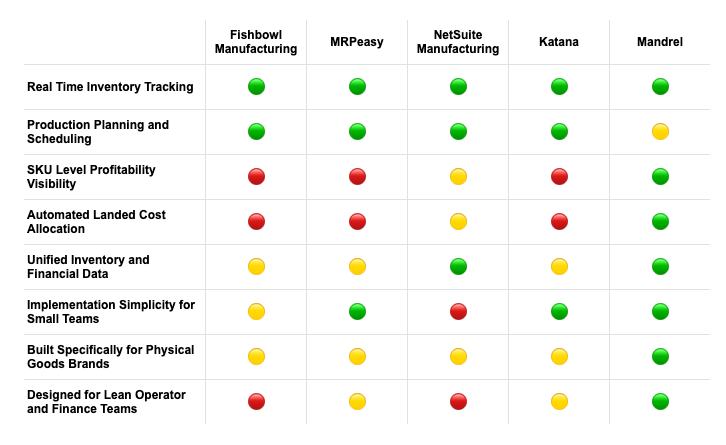
Mandrel is a game-changer for modern CPG and physical goods businesses that want to operate with precision. It’s an AI-native ERP, which means it’s built from the ground up to turn your inventory data into clear, actionable intelligence. Instead of just tracking what you have, Mandrel gives you real-time, SKU-level visibility into your revenue, costs, and inventory. It automates tedious financial workflows like landed cost allocation and revenue recognition, connecting your operations and finance teams around a single source of truth. If you’re focused on scaling efficiently and making smarter, data-backed decisions to protect your margins, Mandrel is designed for you.
2. Fishbowl Manufacturing
Fishbowl is a well-known name in the inventory world, especially for businesses that run on QuickBooks. It’s a popular choice for small to medium-sized manufacturers because of its integration with accounting software. Fishbowl provides tools to manage raw materials, track work-in-progress, and handle finished goods. Features like barcode scanning, order management, and real-time updates help bring structure to manufacturing operations.
Because it functions as an add-on to accounting software rather than a fully unified operational and financial system, inventory and margin data can remain somewhat disconnected. As transaction volume grows and landed costs fluctuate, reconciliation work can increase. For manufacturers focused on precise SKU-level profitability and automated financial workflows, Fishbowl may require additional reporting outside the platform.
3. MRPeasy
MRPeasy is built for simplicity and accessibility, particularly for small and mid-sized manufacturers. It combines production planning, inventory, and procurement tools into a clean cloud-based interface. Its forecasting and scheduling features help reduce stockouts and production bottlenecks.
However, MRPeasy is primarily production-focused. While it supports inventory control and planning, deeper financial automation and real-time SKU-level profitability analysis are not central strengths. For growing CPG brands managing variable freight costs, promotions, and multi-channel margins, additional financial insight may require separate systems or manual analysis.
4. NetSuite Manufacturing
NetSuite Manufacturing is part of a broader cloud ERP platform designed for complex organizations. It provides strong capabilities for demand planning, supply chain management, and production control, all within an integrated system.
The tradeoff is implementation weight. NetSuite deployments often require significant configuration, partner support, and ongoing system management. For small and mid-sized manufacturers, the infrastructure and cost structure can exceed immediate operational needs. While comprehensive, it may introduce enterprise-level complexity when the primary goal is margin clarity and efficient production scaling.
5. Katana Manufacturing ERP
Katana is popular among small manufacturers and direct-to-consumer brands because of its intuitive interface and visual production workflows. It connects production schedules with ecommerce platforms and provides real-time tracking of raw materials and finished goods.
Katana’s strength lies in operational visibility rather than financial depth. While it supports production management effectively, automated landed cost allocation and detailed SKU-level margin intelligence may require integration with accounting tools. For brands seeking tighter alignment between warehouse operations and financial performance, that separation can create extra reconciliation steps.
How is inventory management software priced?
Figuring out the cost of inventory management software can feel like trying to hit a moving target. Prices aren't always straightforward, and what you see on a pricing page is rarely the full picture. The final cost depends on the pricing model, the specific features your business needs, and other costs that pop up during implementation. To make a smart investment, you need to look past the initial price tag and understand how providers structure their fees. We'll break down the common models, feature tiers, and how to calculate the true total cost so you can choose a solution that fits your budget.
Subscription vs. one-time purchase
Most modern inventory software operates on a subscription model, often called Software-as-a-Service (SaaS). You’ll pay a recurring monthly or annual fee, which typically includes customer support and regular updates. This approach keeps upfront costs low and makes budgeting predictable. The alternative is a one-time purchase for a perpetual license. This involves a significant initial investment to own the software, but you might still face extra annual fees for maintenance and support. While less common now, this model can appeal to larger enterprises. The right choice depends on your company’s cash flow and how you prefer to manage technology expenses.
Understanding feature-based tiers
Software providers rarely offer a single, one-size-fits-all package. Instead, you’ll usually find tiered pricing plans based on your company’s size and needs. These tiers are often structured around the number of users, warehouses, monthly orders, or SKUs you manage. As you move up the tiers, you gain access to more advanced features like AI-powered demand forecasting or specialized integrations. When you compare inventory management systems, it’s essential to map your business requirements to the features in each tier. Don't pay for a premium plan full of tools you won't use. A thorough evaluation helps you find a plan that gives you what you need now with room to grow.
Calculating the total cost of ownership
The sticker price is just the beginning. To understand the real financial impact, you need to calculate the total cost of ownership (TCO). This includes all expenses associated with the software throughout its lifecycle. Think beyond the subscription fee and factor in one-time implementation costs, data migration services, and training for your team. You should also ask about ongoing expenses for customer support, maintenance, and any third-party integrations. A system that seems cheaper upfront could end up costing more if it requires extensive customization or paid support. Evaluating technical features like scalability and ease of use is key to finding a truly cost-effective solution.
Common manufacturing inventory challenges (and how to solve them)
Getting a handle on your inventory is one of the most impactful things you can do for your business, but it’s rarely simple. Many physical goods brands, especially as they scale, run into the same handful of roadblocks that can turn inventory from an asset into a liability. These issues often create a domino effect, where one problem triggers another, leading to tied-up cash, production bottlenecks, and frustrated customers. Understanding these common hurdles is the first step toward building a more resilient and profitable operation.
Inaccurate demand forecasting
Guessing how much product you’re going to sell is a tough game. Get it wrong, and the consequences can be costly. Inaccurate forecasting can lead to high holding costs from overstocking or, on the other end, production delays and lost sales from stockouts. This challenge stems from the sheer number of variables at play. seasonality, shifting market trends, competitor promotions, and supply chain disruptions can all throw your predictions off course. Without a solid, data-driven approach, you’re essentially flying blind, making decisions based on gut feelings rather than a clear picture of what’s to come. This uncertainty directly impacts your ability to manage cash flow and maintain operational efficiency.
Manual tracking errors
If you’re still relying on spreadsheets to manage your inventory, you’re likely all too familiar with this problem. Using spreadsheets and manual tracking is slow, prone to mistakes, and makes it nearly impossible to know your exact stock levels in real-time. A simple typo, a missed entry, or a formula error can create a significant discrepancy between what your spreadsheet says you have and what’s actually on the shelf. These small errors snowball over time, leading to surprise stockouts that halt production or accidental overstocking that ties up your capital. This lack of accurate, immediate data makes it incredibly difficult to make confident purchasing and production decisions.
High holding costs and waste
Excess inventory isn’t just a space problem; it’s a financial drain. Poor inventory management often leads to overstocking, which ties up money, takes up space, and can lead to waste. These expenses, known as holding costs, include everything from warehouse rent and insurance to the labor required to manage the stock. More importantly, every dollar tied up in a product that isn’t selling is a dollar you can’t invest in growth, marketing, or product development. For perishable or trend-sensitive goods, this excess inventory also runs the risk of becoming obsolete or expiring, turning a potential asset into a total loss.
Managing multiple locations
As your business grows, so does its complexity. Managing inventory across a single warehouse is one thing, but keeping track of stock across multiple distribution centers, 3PLs, or retail stores is a whole different challenge. Each location has its own demand patterns, lead times, and stock levels, and without a centralized system, you get a fragmented view of your inventory. This often leads to inefficient situations where one location is overstocked on an item while another is facing a stockout. Coordinating transfers and ensuring each location has the right amount of stock requires a level of visibility and control that manual systems simply can’t provide.
Operational best practices for inventory control
Even the most powerful software is only as effective as the processes that support it. Technology can automate workflows and provide incredible insights, but it can’t replace the need for solid operational habits. Building a resilient inventory system means pairing the right digital tools with smart, consistent real-world practices. It’s about creating a culture of precision and accountability on your warehouse floor. By focusing on a few key best practices, you can ensure the data going into your system is accurate, your team is aligned, and your operations run as smoothly as possible. These habits are the foundation that allows your software to deliver on its promise of control and clarity.
Establish clear internal rules and roles
Ambiguity is the enemy of efficient inventory management. When your team isn't sure who is responsible for what, or what the process is for reordering materials, mistakes are bound to happen. The first step in creating a reliable system is to establish clear rules for everyone to follow. This means defining specific reorder points for every SKU, setting standard order quantities, and clearly assigning ownership for tasks like placing purchase orders and conducting cycle counts. This isn’t about creating unnecessary bureaucracy; it’s about building a predictable, repeatable process that reduces confusion, prevents costly errors, and ensures that everyone on your team is working together seamlessly.
Track supplier lead times
Your suppliers’ timelines have a direct impact on your own production schedule and stock levels. Simply trusting the lead time they give you isn’t enough; you need to track how long it actually takes for your orders to arrive. Consistently monitoring this data gives you a realistic picture of your supply chain, allowing you to adjust your stock levels and set more accurate safety stock thresholds. If a supplier is consistently late, you’ll have the data to anticipate those delays and order earlier. If they’re faster than expected, you can reduce your safety stock and free up cash. This simple practice moves you from reactive problem-solving to proactive planning.
Don't forget the physical tools
Your inventory management software is the brain of your operation, but it needs hands and eyes on the warehouse floor. This is where physical tools like barcode scanners and RFID tags become essential. These technologies bridge the gap between your physical stock and your digital records, dramatically reducing the human error that comes with manual data entry. Using scanners to check in raw materials, track work-in-progress, and pick finished goods makes your entire operation faster and more accurate. When these tools feed data directly into a central system, you get the real-time, SKU-level visibility needed to make confident decisions about production, purchasing, and sales.
The latest episode of the BlueOcean by StartOps podcast explores the future of manufacturing inventory management
What are the benefits of using inventory management software?
Switching from spreadsheets to dedicated inventory management software isn't just about getting organized. It's about fundamentally changing how your business operates. The right platform transforms your inventory from a simple list of assets into a source of actionable intelligence. It gives you the clarity to make smarter decisions, streamline your workflows, and build a more resilient supply chain. By automating tedious tasks and providing a real-time view of your operations, you can focus less on putting out fires and more on strategic growth.
Improve operational efficiency
Good inventory management helps you walk the fine line between having too much and too little stock. The goal is to avoid two major problems: stockouts that halt production and disappoint customers, and overstocking that ties up capital and takes up valuable warehouse space. With the right software, you can automate reorder points and use data-driven insights to maintain optimal inventory levels. This ensures your production lines keep running smoothly and you can fulfill customer orders without delay, creating a more predictable and efficient supply chain.
Find significant cost savings
Effective inventory management leads directly to cost savings and a healthier bottom line. Balancing your inventory is key to avoiding the high costs of holding excess stock. like storage fees, insurance, and potential waste from expired or obsolete products. At the same time, you prevent the lost revenue that comes from stockouts. By providing a clear picture of your inventory value and movement, software helps you optimize your purchasing decisions, reduce carrying costs, and improve your overall cash flow management. This financial discipline is essential for sustainable growth.
Gain full visibility and control
If you can’t see what’s happening with your inventory in real time, you can’t control it. Modern inventory software gives you that essential visibility. Digital tools, especially those using barcodes or RFID, automate tracking, reduce manual errors, and provide instant updates from the warehouse floor to your dashboard. This is where an AI-native platform like Mandrel shines, offering SKU-level intelligence that lets you see exactly what you have, where it is, and how it’s performing. This granular, end-to-end auditability allows you to make faster, more informed decisions about everything from production planning to order fulfillment.
Enhance customer satisfaction
Ultimately, your inventory exists to meet customer demand. Happy customers are the ones who get what they want, when they want it. Good inventory data helps you accurately forecast demand, so you don't run out of popular items or disappoint buyers with backorders. When you can reliably fulfill orders on time and with the correct products, you build trust and loyalty. This positive experience turns one-time buyers into repeat customers, which is the foundation of any successful physical goods business.
Common mistakes to avoid when implementing new software
You’ve done the research, sat through the demos, and finally picked the perfect inventory management software. That’s a huge step, but the work isn’t over yet. How you introduce that new software into your business is just as important as the software itself. A bumpy rollout can create frustration, waste time, and even make you question your decision. Let’s walk through some of the most common implementation mistakes I’ve seen and, more importantly, how you can sidestep them for a smooth and successful transition.
Rushing data migration
Data migration is the process of moving all your critical information. SKUs, purchase orders, supplier details, sales history. from your old system to the new one. It’s tempting to rush through this step to get up and running quickly, but this is where a little patience pays off big time. Rushing the data migration process is a classic mistake that can lead to incomplete or inaccurate data being transferred, causing major headaches later. Think of it like moving houses: you wouldn't just throw everything into boxes without sorting it first. Take the time to clean and validate your data before you move it. This ensures you’re starting fresh with a single source of truth and not carrying old errors into your shiny new system.
Skipping staff training
Your new software could have all the bells and whistles, but it won’t do you any good if your team doesn’t know how to use it. Failing to provide proper training is a surefire way to see low adoption rates and a frustrating lack of results. When people don't feel confident with a new tool, they often revert to their old, familiar workflows. hello again, spreadsheets!. which defeats the purpose of your investment. Effective training goes beyond a single one-hour demo. Set your team up for success with hands-on sessions, role-specific guides, and ongoing support. A well-trained team is an empowered team, one that can fully leverage the software to improve your operations.
Overlooking system integrations
Your inventory management system doesn't operate in a vacuum. It needs to communicate with your other business tools, like your accounting software, ecommerce platform, and shipping carriers. Overlooking how the new software will integrate with your existing systems can create frustrating data silos and major inefficiencies. Without seamless integration, you're stuck with manual data entry, which is not only tedious but also a huge source of errors. Imagine your sales team promising a customer a product that your inventory system knows is out of stock. A proper integration strategy ensures all your systems are speaking the same language, giving you a unified, real-time view of your entire business. Before you commit, map out your tech stack and confirm your chosen software can connect to everything.
Forgetting to test the system thoroughly
It’s easy to get excited and want to flip the switch on your new system the moment it’s installed. But skipping a thorough testing phase is like skipping the final dress rehearsal before opening night—you’re inviting unexpected problems to show up at the worst possible time. Proper testing isn’t just about making sure the software doesn’t crash. It’s about running real-world scenarios to find any bugs or workflow hiccups before they impact your business. Have your team process a mock purchase order, receive a shipment, and fulfill a test sale. This process, often called user acceptance testing, ensures that the system works as expected and that your integrations are pulling the correct data. Catching a problem during the testing phase is a minor inconvenience; catching it after you’ve gone live can disrupt your entire operation.
How to measure success: key inventory metrics to track
Once your inventory management system is up and running, you need a way to measure its impact. Tracking the right key performance indicators (KPIs) helps you see what’s working, identify areas for improvement, and make data-driven decisions that protect your margins. The goal isn't just to collect data, but to turn it into actionable intelligence that guides your strategy. With a platform that provides real-time, SKU-level insights, monitoring these metrics becomes an automatic part of your workflow, not a manual chore.
Inventory turnover ratio
Think of this as the pulse of your inventory health. The inventory turnover ratio measures how many times you sell through and replace your entire stock over a specific period. A higher ratio generally means you’re managing inventory efficiently. products are selling quickly, and you aren’t tying up cash in slow-moving goods. However, a ratio that’s too high might signal you’re understocking and missing out on potential sales. Tracking this at the SKU level is critical. It helps you pinpoint which products are your bestsellers and which are collecting dust, so you can adjust your purchasing and production plans accordingly.
Stockout and order fulfillment rates
These two metrics are deeply connected and have a direct impact on customer happiness. The stockout rate tells you how often a specific item is out of stock when a customer wants to buy it. The order fulfillment rate shows the percentage of customer orders you successfully ship on time and in full. Frequent stockouts lead to a poor fulfillment rate, which can damage your brand’s reputation and send customers to your competitors. Consistently monitoring these numbers helps you fine-tune your reorder points and safety stock levels, ensuring you have the right products available to meet customer demand without fail.
Inventory carrying cost
Holding inventory is never free. Inventory carrying cost, also known as holding cost, includes all the expenses tied to storing your unsold goods. This covers everything from warehouse rent and utilities to insurance, labor, and even the cost of capital tied up in that inventory. These costs can quietly eat away at your profitability, often accounting for 20% to 30% of your inventory's value. Understanding your true carrying costs is essential for optimizing how much stock you keep on hand. By improving your demand forecasting and reducing excess inventory, you can lower these expenses and free up cash for other areas of your business.
How to choose the right inventory solution
Picking the right inventory solution is a major step for your business. It’s not just about tracking what’s on your shelves; it’s about building a foundation for smarter operations, better financial health, and future growth. The best system for you will feel like a natural extension of your team, anticipating your needs and clearing roadblocks before you even hit them. To find that perfect fit, you’ll want to look at your business from a few different angles, from your day-to-day challenges to your long-term goals. Let’s walk through a simple, three-step process to help you make a confident choice.
Step 1: Assess your business needs
Before you even look at a single software demo, your first step is to look inward. What are the biggest inventory headaches you’re dealing with right now? Are you constantly running out of your best-sellers? Is manual data entry eating up hours of your week? Are you struggling to get a clear picture of your landed costs and profit margins for each SKU?
Make a list of your must-haves versus your nice-to-haves. A must-have might be real-time tracking across multiple warehouses, while a nice-to-have could be advanced analytics. Evaluating potential systems based on the direct benefits to your business in these key areas will help you cut through the noise and focus on what truly matters for your operations.
Step 2: Evaluate integration and scalability
Your inventory management software doesn't operate in a vacuum. It needs to communicate seamlessly with the other tools you rely on, like your accounting software, ecommerce platform, and shipping carriers. A system with poor integration capabilities will only create more manual work and data silos. Ask potential vendors about their existing integrations and their API capabilities for any custom connections you might need.
Equally important is scalability. The solution that works for you today should also work for you in three to five years. Think about your growth plans. Will this system handle an increase in SKUs, order volume, and sales channels? Choosing a platform that can grow with you is essential for long-term success, as many of Mandrel's customers have discovered.
Step 3: Make the final decision
Once you have a shortlist of solutions that meet your needs and can scale, it’s time to look at the practical details. Pricing for inventory software can vary widely, from monthly subscriptions to one-time license fees. Look beyond the sticker price and consider the total cost of ownership, which includes implementation, data migration, training, and ongoing support.
Don’t underestimate the importance of user experience. If a system is clunky and difficult to use, your team won’t adopt it, no matter how powerful its features are. This is your chance to book a demo and get a feel for the software firsthand. Ask questions, run through your typical workflows, and make sure it feels intuitive for you and your team.
Related articles
- Best Inventory Management Software: 5 Best Tools Compared
- Warehouse Inventory Management Software: The Ultimate Guide
- ERP for Small Business: 6 Best Systems Reviewed (2026)
- Manufacturing ERP 101: Your Definitive Guide
- SKU-Level Economics: What Your Gross Margin Isn’t Telling You
Frequently asked questions
I'm a small business. Can I just use spreadsheets for now?
Spreadsheets can feel like a good starting point, but they often create more problems than they solve as you grow. They’re prone to human error, can’t provide real-time updates, and make it nearly impossible for different team members to work from the same information. The real cost of sticking with spreadsheets isn't just the time spent on manual entry; it's the poor decisions you make based on outdated or inaccurate data, leading to surprise stockouts or cash tied up in slow-moving products.
What's the real difference between inventory management software and an ERP?
Think of it this way: standard inventory management software is like a very smart calculator for your stock. It tracks what you have and where it is. An ERP, or Enterprise Resource Planning system, is more like a central command center for your entire business. It connects your inventory data with your finance, sales, and production departments, creating a single, unified view of your operations. This integration allows you to see not just what you have, but how your inventory impacts your cash flow, profit margins, and overall business health.
What does "SKU-level visibility" actually mean in practice?
SKU-level visibility means you can track the financial and operational story of every single product variation you sell. Instead of just knowing you have 100 chairs in stock, you know you have 25 red armchairs, 40 blue dining chairs, and 35 oak stools. More importantly, you can see the specific landed costs, revenue, and profit margin for each of those variations. This granular detail lets you make much smarter decisions about what to produce, what to discount, and which products are truly driving your growth.
How do I know if my inventory turnover ratio is "good"?
There isn't a single magic number for a "good" inventory turnover ratio because it varies so much by industry. A company selling fresh produce will have a much faster turnover than one selling high-end furniture. The key is to benchmark against your industry standards and, more importantly, against your own historical performance. A steady or increasing ratio usually signals healthy sales and efficient management, while a declining ratio can be an early warning sign that you have too much cash tied up in stock that isn't selling.
My team is resistant to change. How can I make the transition to new software smoother?
This is a common and completely valid concern. The best way to get your team on board is to involve them early and focus on how the new system makes their specific jobs easier. Frame it as a tool that eliminates their most tedious tasks, like manual data entry or hunting for information. Provide thorough, hands-on training that is tailored to different roles, and create a space where they can ask questions without judgment. When your team sees the software as a solution to their daily frustrations rather than just another mandate from management, adoption happens much more naturally.