

A stockout on your best-selling product. A frantic search for a misplaced pallet. An order shipped with the wrong item. These aren't just daily operational headaches; they are symptoms of a disconnected system. Effective warehouse inventory management brings order to this chaos by creating a clear, repeatable workflow for every item that enters and leaves your facility. It’s the operational backbone that connects your physical goods to your financial data. Getting it right means fewer errors, faster fulfillment, and more reliable reporting, allowing you to build customer trust and make smarter decisions based on what’s actually happening on your shelves.
Your inventory is one of your biggest assets, but it can also be your biggest liability. Every item sitting on a shelf represents cash that’s tied up and unavailable for other parts of your business. This is why smart warehouse inventory management is fundamentally a financial strategy. By optimizing how you track, store, and move your products, you can directly improve your cash flow, reduce carrying costs, and ensure your financial reporting is accurate and compliant. It’s about more than just counting boxes; it’s about making your inventory work for you, protecting your margins, and building a more profitable and resilient company.
Key takeaways
- Start with a smart layout and solid processes: Organize your warehouse with zones and ABC analysis, and perfect your workflow from receiving to shipping. A logical flow is the foundation for cutting down on errors and speeding up fulfillment.
- Embrace technology for live inventory data: Move beyond spreadsheets to a system that provides real-time, SKU-level accuracy. This is the key to preventing stockouts, reducing picking mistakes, and making smarter purchasing decisions.
- Connect warehouse operations to your bottom line: Effective inventory management directly impacts your finances by reducing carrying costs and freeing up cash flow. It also ensures you have the accurate, auditable data required for compliant financial reporting.
What is warehouse inventory management?
Warehouse inventory management is the system you use to oversee every product that moves through your warehouse. Think of it as the complete lifecycle of your stock, from the moment it arrives at your receiving dock to the second it ships out to a customer. This process involves receiving new items, storing them correctly, tracking their location and quantity, and preparing them for orders. It’s about more than just counting boxes; it’s a strategic approach to ensure your products are in the right place at the right time.
Getting this right is fundamental for any business that sells physical goods. A well-run warehouse keeps your entire supply chain moving smoothly, preventing delays that can frustrate customers and hurt your reputation. It’s the operational backbone that supports your sales and marketing efforts. When you have a clear, organized system, you can fulfill orders faster, reduce errors, and make smarter decisions about when to reorder stock. This level of control is what separates growing brands from those that struggle with operational chaos.
The difference between inventory and warehouse management
It’s common to hear "inventory management" and "warehouse management" used as if they’re the same thing, but they focus on two different parts of your business. Think of inventory management as the strategic "what" and "why." It’s about planning and forecasting—deciding which products to carry, how much stock to keep on hand across your entire supply chain, and when to place reorders. This is a high-level function that directly impacts your cash flow by ensuring you have the right amount of capital invested in your products.
Warehouse management, on the other hand, is the operational "how" and "where." It deals with the day-to-day physical activities inside your warehouse, from receiving and inspecting shipments to storing items, picking products, and packing them for shipment. The goal is efficiency and accuracy in your physical operations. A well-managed warehouse ensures orders go out correctly and on time, which is essential for keeping customers happy and preventing items from getting lost or damaged. Ultimately, your warehouse management provides the accurate data needed to make your inventory strategy successful.
What are the key parts of warehouse inventory management?
At its heart, warehouse inventory management can be broken down into a few key stages. Each step is crucial for maintaining an efficient flow of goods and accurate records. Understanding these components (explained in more detail below) helps you identify where your own processes can be improved.
The main steps include:
- Receiving: This is when new inventory arrives. It involves inspecting products for damage, verifying quantities against purchase orders, and officially logging them into your system.
- Putaway and storage: Once received, items are moved to their designated storage locations. An organized storage system makes products easy to find later.
- Picking: When a customer order comes in, warehouse staff locate and retrieve the correct items from the shelves.
- Packing: Picked items are prepared for shipment, which includes choosing the right packaging, adding packing slips, and sealing boxes.
- Shipping: The final package is labeled and handed off to a carrier for delivery to the customer.
- Returns: This process, also known as reverse logistics, handles items that customers send back.
Why does it matter for your business?
Effective warehouse inventory management directly impacts your bottom line and customer satisfaction. When your warehouse runs efficiently, you can reduce unnecessary costs tied to storage and shipping. An organized system means less time wasted searching for products, which lowers labor costs and helps you get orders out the door faster. This speed and accuracy are key to keeping your customers happy.
When orders are filled quickly and correctly, customers are more likely to buy from you again and recommend your brand to others. Good management also helps you avoid common pitfalls like stockouts or overstocking, ensuring your capital isn't tied up in slow-moving inventory. Ultimately, a streamlined warehouse inventory process makes your entire business more resilient, profitable, and prepared for growth.
A recent episode of the BlueOcean by StartOps podcast previewed the future of inventory warehouse management
The real-world impact of inventory accuracy
Inventory accuracy isn't just an operational goal; it's a financial necessity. When your system perfectly reflects what’s actually on the shelf, you eliminate wasted time searching for products, which cuts labor costs and gets orders out the door faster. This speed and precision are what build customer trust and encourage repeat business. More importantly, accuracy prevents costly errors like stockouts that lead to lost sales and overstocking that ties up your cash. Every decision, from purchasing to financial planning, relies on knowing exactly what you have and where it is. With a clear, SKU-level view of your inventory, you can protect your margins, ensure your financial statements are reliable, and build a more resilient business.
Your guide to the essential warehouse inventory processes
Think of your warehouse as a hub of constant motion. For everything to run smoothly, you need a clear, repeatable workflow for how inventory moves from the delivery truck to your customer's doorstep. These core processes are the foundation of an efficient warehouse. When they’re dialed in, you get accurate inventory data, faster fulfillment times, and fewer headaches. When they’re messy, you end up with stock discrepancies, shipping delays, and frustrated customers.
Getting these four steps right is non-negotiable for any brand managing physical products. Each stage builds on the last, creating a chain of events where accuracy and efficiency are paramount. From the moment a shipment arrives, every action taken affects your inventory records, your team’s productivity, and your ability to report financials accurately. Let's walk through the journey an item takes through your warehouse, from receiving to shipping.
Receiving and inspecting your incoming stock
This is your first and most important checkpoint. Receiving is the process of accepting new inventory from your suppliers. It’s more than just signing a paper and unloading a truck; it’s your first opportunity to verify that you got exactly what you paid for. Your team should carefully check the incoming goods against the purchase order, making sure the product types and quantities are correct.
This is also the time to inspect for any damage that may have occurred in transit. Once everything is confirmed, you’ll update your inventory management system to reflect the new stock. Getting this step right is critical, as any errors here will create a ripple effect, leading to inaccurate stock counts down the line.
Storing and organizing products the right way
Once inventory is received and inspected, it needs a home. This process, often called "putaway," involves moving products to their designated storage locations. A disorganized warehouse is an inefficient one, so having a logical system is key. You should plan your warehouse layout to make this process as smooth as possible.
A great strategy is to store your most frequently ordered items in easily accessible locations to speed up picking times. You can also organize products by type, size, or batch number. The goal is to create a system where anyone on your team can find any item quickly and safely. A well-organized storage system minimizes travel time for your staff and makes the entire fulfillment process more efficient.
Picking and fulfilling orders with speed and accuracy
When a customer places an order, the picking process begins. This involves your warehouse team collecting the specific items from their storage locations to fulfill the order. The efficiency of your picking process has a direct impact on how quickly you can get orders out the door. Inaccurate picking leads to wrong orders, unhappy customers, and costly returns.
To make this step more effective, you can implement strategies like batch picking, where you gather items for multiple similar orders at once. Placing your fastest-selling products in the most convenient spots also cuts down on the time it takes to assemble an order. The faster and more accurately you can fulfill orders, the more satisfied your customers will be.
Packing and shipping orders to happy customers
This is the final stage before your product leaves the warehouse. During packing, items are carefully placed in boxes with protective materials to prevent damage during their journey. Your team should double-check that the right products are in the box before sealing it. This is your last chance to ensure order accuracy.
Next comes shipping, which includes weighing the package, printing the correct shipping label, and handing it off to your chosen carrier. A well-packed package that arrives on time creates a positive final impression on your customer. Streamlining this last step ensures your products are protected and your brand’s reputation for reliable delivery stays strong.
Think of your warehouse layout as a roadmap for your inventory. A clear and strategic plan helps your team move from receiving to putaway to picking and packing without unnecessary steps or confusion.
How to optimize your warehouse layout
A well-organized warehouse is the foundation of efficient inventory management. The way you arrange your space directly impacts everything from how quickly your team can find products to how fast you can get orders out the door. A smart layout reduces travel time for your pickers, minimizes the risk of errors, and makes your entire fulfillment process smoother and more cost-effective. It’s not just about being tidy; it’s about creating a logical flow that supports your operations.
Think of your warehouse layout as a roadmap for your inventory. A clear and strategic plan helps your team move from receiving to putaway to picking and packing without unnecessary steps or confusion. By planning your layout around how your products actually move, you can cut down on bottlenecks and improve overall productivity. This involves more than just setting up shelves. It means thinking critically about where specific products should live, how to group items, and how to use every square foot of your space, including the vertical dimension. With real-time SKU-level visibility, you can make data-driven decisions to create a layout that truly works for your business.
Organizing your space with zone-based storage
One of the most effective ways to bring order to your warehouse is through zone-based storage. This simply means dividing your warehouse into distinct sections, or zones, for different types of products. You can organize these zones by product category, sales velocity, size, or special handling requirements like refrigeration. The goal is to create a system where everyone knows exactly where to go to find a specific item.
By organizing the physical space of your warehouse using zones, aisles, and bins, you can help workers find items quickly and reduce the time they spend walking around. For example, you can create a dedicated zone near the packing stations for your fastest-selling products. This simple change can dramatically speed up fulfillment for your most popular orders.
Using ABC analysis for smarter product placement
To take your zone strategy a step further, you can use ABC analysis to decide where to place products within those zones. This method involves categorizing your inventory based on its value and how often it sells. Your 'A' items are your top sellers, the products that generate the most revenue. 'B' items are moderately popular, and 'C' items are your slow-movers.
This data-driven approach allows for more strategic placement and management of your stock. You should place your 'A' items in the most accessible locations, like at waist level on shelves closest to the shipping area. 'B' items can go a bit higher or further away, while 'C' items can be stored in the back or on top shelves. This ensures your team spends the least amount of time retrieving the products they need most often.
Using slotting optimization to speed up picking
Slotting optimization is the process of assigning each product to a specific warehouse location to make the picking process as efficient as possible. Think of it as taking your zone and ABC analysis strategies to the next level. It’s not just about putting fast-movers near the front; it’s about analyzing sales velocity, product size, and weight to find the perfect home for every single SKU. The goal is to minimize the travel time for your warehouse team, which is often the most time-consuming part of order fulfillment.
By strategically organizing your products, you can significantly reduce the time your team spends walking through aisles. This streamlines the picking process, allowing you to fulfill more orders in less time and with fewer people. Effective slotting relies on accurate, real-time data. You need to know which products are selling, how quickly they're moving, and how their demand changes over time. Having a system that provides this kind of SKU-level intelligence is essential for making smart slotting decisions that directly impact your operational efficiency and labor costs.
Making the most of your vertical space
When you feel like you’re running out of room, the answer isn’t always to get a bigger building. Often, the solution is to look up. Using your warehouse’s vertical space is a smart way to increase your storage capacity without expanding your footprint. This means installing taller shelving units, pallet racks, or even mezzanines to create additional levels for storage.
Building upwards is a key part of smart warehouse design. For businesses looking to scale, tools like Automated Storage and Retrieval Systems (ASRS) can maximize vertical space and automate the process of storing and retrieving goods. By thinking in three dimensions, you can fit more inventory into your existing space, keeping your operations consolidated and efficient while reducing the costs associated with a larger facility.
BLOG: SKU-Level Insights Is the Future of Inventory Management
Core inventory management methods and principles
Once your warehouse is organized, you can start applying specific inventory management methods to refine your operations. There isn’t a single right way to do things; the best approach is usually a mix of different strategies tailored to your products, sales cycle, and business goals. Think of these principles as tools in your operational toolkit. Implementing them effectively depends on having clear, accurate data about your inventory, which is why a solid system of record is so important. With the right information, you can choose the methods that will have the biggest impact on your efficiency and profitability.
FIFO vs. LIFO: managing perishable and non-perishable goods
Two of the most fundamental inventory accounting methods are FIFO and LIFO. FIFO stands for "First-In, First-Out," and it’s a simple concept: you sell your oldest stock first. This is the go-to method for any business selling perishable goods or products with an expiration date, like food, cosmetics, or supplements. It ensures that older items are moved out before they spoil or become obsolete, reducing waste and protecting your margins. For most CPG brands, FIFO is the logical and most common choice for managing physical inventory.
LIFO, or "Last-In, First-Out," is the opposite approach, where you sell your newest inventory first. This method is less common for businesses managing physical goods because it can lead to older stock sitting on shelves and potentially expiring. However, some companies use it for its potential tax advantages during periods of rising costs. When choosing between them, consider your product type and financial strategy, but for day-to-day warehouse operations, a FIFO flow is almost always more practical.
Just-in-time (JIT) inventory
The just-in-time (JIT) method is an inventory strategy where you order and receive products only as they are needed to fulfill customer orders. The goal is to minimize the amount of inventory you hold, which can dramatically reduce carrying costs and free up cash. When it works, JIT is incredibly efficient, as it prevents you from tying up capital in stock that isn't selling. It’s a lean approach that forces you to be highly responsive to customer demand.
However, JIT comes with significant risks. It requires incredibly accurate demand forecasting and a highly reliable supply chain. If a supplier is late with a delivery or you experience an unexpected surge in orders, you can face a stockout, leading to lost sales and unhappy customers. For JIT to be successful, you need real-time visibility into your sales data and close relationships with your suppliers.
Cross-docking for faster turnaround
Cross-docking is a logistics strategy where products are unloaded from an incoming truck and immediately loaded onto an outbound truck with little to no storage in between. Essentially, your warehouse acts as a sorting center rather than a storage facility. This method is ideal for high-volume, fast-moving products that have a consistent and predictable demand. It’s a way to get products to customers faster while almost completely eliminating storage costs.
This technique requires precise coordination between your inbound and outbound shipments. You need to know exactly what’s coming in and where it needs to go, often before it even arrives. When executed well, cross-docking can significantly speed up your supply chain, making it a powerful tool for businesses that need to move large quantities of goods quickly.
Batch tracking for quality control and recalls
Batch tracking, also known as lot tracking, is the process of grouping and monitoring products that were made in the same production run. For CPG brands, this isn't just a good idea—it's often a necessity. If a quality issue arises or a product needs to be recalled, batch tracking allows you to identify the specific affected items quickly and precisely. Instead of having to pull all of your inventory off the shelves, you can isolate the single batch that has a problem.
This level of traceability is crucial for protecting your customers and your brand's reputation, especially in industries like food, beverage, and personal care. Implementing batch tracking requires a system that can manage data at a granular level, linking specific production runs to purchase orders and customer sales. This ensures you have an end-to-end audit trail for every item that moves through your warehouse.
Economic order quantity (EOQ) for cost efficiency
The Economic Order Quantity (EOQ) is a formula that helps you determine the ideal amount of inventory to order at one time. The goal is to find the perfect balance between two competing costs: your ordering costs (the expenses associated with placing an order, like shipping and processing fees) and your holding costs (the expenses of storing inventory, like warehouse space and insurance). Ordering in small, frequent batches can lead to high ordering costs, while placing large, infrequent orders results in high holding costs.
EOQ helps you find the sweet spot that minimizes your total inventory costs. To use the formula effectively, you need accurate data on your annual demand, the cost per order, and your carrying cost per unit. Having a system that provides reliable, SKU-level financial data is essential for calculating an EOQ that truly reflects your business operations and helps you make more profitable purchasing decisions.
Maintaining safety stock to prevent stockouts
No matter how well you forecast, surprises happen. A supplier might face a delay, or a marketing campaign might perform better than expected. Safety stock is the extra inventory you keep on hand to act as a buffer against this kind of uncertainty. It’s your insurance policy against stockouts, ensuring you can continue to fulfill orders even when things don’t go exactly as planned. This is a key principle for maintaining customer satisfaction and avoiding lost sales.
The amount of safety stock you need depends on factors like the variability of customer demand and the reliability of your suppliers. While it might seem to contradict lean principles like JIT, maintaining a calculated level of safety stock is a practical and necessary strategy for most businesses. It’s about finding the right balance between being lean and being resilient.
Adopting lean warehousing principles
Lean warehousing is less of a specific technique and more of a guiding philosophy. It’s about systematically identifying and eliminating waste in every aspect of your warehouse operations. Waste can take many forms, including excess inventory, unnecessary motion (like workers walking long distances to pick items), waiting time between process steps, and defects or errors. The core idea is to create more value for your customers using fewer resources.
Adopting a lean approach involves continuously looking for ways to improve your processes. This could mean reorganizing your warehouse layout to reduce travel time, standardizing workflows to prevent errors, or simply keeping the workspace clean and organized to improve efficiency and safety. It’s a commitment to making small, ongoing improvements that add up to significant gains in productivity and cost savings over time.
Considering a dropshipping model
For some businesses, the most effective way to manage inventory is to not manage it at all. Dropshipping is a fulfillment model where you sell products to customers, but a third-party supplier stores, packs, and ships the products on your behalf. You act as the storefront, handling marketing and customer service, while your supplier takes care of the logistics. This model can be an attractive option for new businesses or for brands looking to test new products without a significant upfront investment in inventory.
The main advantage of dropshipping is that it eliminates inventory holding costs and the complexities of warehouse management. However, it also comes with trade-offs. You typically have lower profit margins and less control over the customer experience, including shipping times and packaging. It’s a different kind of business model, but it’s worth considering as an alternative or a supplement to traditional inventory management.
How to make your inventory tracking more accurate
Accurate inventory tracking is the bedrock of a healthy CPG business. When your numbers are off, it creates a domino effect that impacts everything from fulfillment times and customer satisfaction to your financial statements. The goal isn't just to count what you have, but to create a system that maintains accuracy day in and day out. This means moving beyond occasional, disruptive physical counts and embracing more dynamic, tech-driven methods.
Building a reliable system involves a few key practices. First, you need a smart approach to counting that doesn't shut down your entire operation. Second, your data needs to reflect what’s happening in your warehouse at this very moment, not what was happening yesterday. Finally, you need to be able to zoom in on the details. Gaining a clear view of each individual SKU is what separates businesses that are just getting by from those that are truly in control of their growth. By implementing these practices, you can build a foundation of trustworthy data that supports smarter purchasing, more efficient operations, and a healthier bottom line.
Cycle counting vs. physical inventory: which is right for you?
For years, the annual physical inventory count was the standard. This meant shutting down the warehouse, getting all hands on deck, and manually counting every single item. While thorough, it’s also incredibly disruptive and expensive. A more modern and efficient approach is cycle counting. Instead of a once-a-year event, cycle counting is a method where you count a small subset of inventory on a regular basis, like daily or weekly. This continuous process helps you maintain accuracy throughout the year, catch discrepancies early, and make corrections without halting operations. It turns inventory counting from a dreaded annual project into a manageable, routine task.
How to keep your inventory updated in real time
If you’re still updating spreadsheets at the end of the day or week, your inventory data is already out of date. In a fast-moving business, that delay can lead to stockouts on popular items or selling products you don’t actually have. Real-time inventory tracking solves this by recording every movement, from receiving to shipping, the moment it happens. Systems like a modern ERP can automate this process, using barcode scans and integrations to keep a live record of your stock levels. This gives your entire team, from the warehouse floor to the finance department, a single, accurate view of what’s available, ensuring your operational and financial data are always in sync.
How to get SKU-level visibility and control
For CPG brands, high-level inventory numbers aren't enough. You need to know the status of every single Stock Keeping Unit (SKU). This means tracking not just how many units of a product you have, but also their specific batch numbers, expiration dates, and locations. This granular control is essential for managing product rotation, handling recalls, and ensuring quality. True SKU-level visibility means you can pinpoint exactly where each item is and how it contributes to your revenue and costs. This detailed insight allows for precise planning, accurate landed cost allocation, and financial reporting you can actually trust.
Building a strong warehouse team and process
Your systems and technology are only as good as the people who use them. A perfectly designed warehouse layout and a state-of-the-art ERP can still fall short if your team isn’t aligned and your processes aren’t clear. Building a strong warehouse operation is about creating a culture of accuracy and efficiency, where every team member understands their role and how it contributes to the bigger picture. This means investing in your people, strengthening your partnerships, protecting your assets, and establishing clear leadership to guide the way.
The importance of proper staff training
Investing in comprehensive training for your warehouse staff is one of the smartest moves you can make. It’s about more than just a quick tour of the facility; it’s about empowering your team with the skills and knowledge they need to perform their jobs accurately and efficiently. Proper training should cover everything from the safe operation of equipment to the correct procedures for receiving, picking, and packing. Most importantly, teach your team how to use your core technology, like barcode scanners and your inventory management system. When your staff understands how to properly use these tools, they make fewer errors, which translates directly to more accurate inventory data and happier customers.
Collaborating with suppliers and using advanced shipping notifications (ASNs)
Your warehouse doesn’t operate in a vacuum. Its efficiency is directly linked to the quality of your supplier relationships. Open and consistent communication with your vendors can give you a heads-up on potential delays and ensure you’re getting exactly what you ordered. One of the most powerful tools for this collaboration is the Advanced Shipping Notification (ASN). An ASN is a digital document your supplier sends you before a shipment arrives, detailing what’s in the shipment and when it’s expected. This information is a game-changer for your receiving team, allowing them to plan labor, clear space, and prepare for the delivery, making the entire receiving process faster and far more accurate.
Implementing security and access control
Your inventory is one of your company’s most valuable assets, and you need to protect it. Inventory shrinkage—the loss of products due to theft, damage, or administrative errors—can quietly eat away at your profits. Implementing basic security measures is essential for protecting your bottom line. This starts with physical security, like limiting access to the warehouse to authorized personnel and ensuring the area is well-lit and monitored. It’s also crucial to have procedural controls, such as requiring sign-offs for inventory movements and conducting regular cycle counts to quickly identify discrepancies. These steps help prevent items from getting lost and create a more accountable environment.
The role of a dedicated warehouse manager
As your business grows, you can’t oversee everything yourself. Appointing a dedicated warehouse manager is a critical step in scaling your operations. This person is the leader on the ground, responsible for overseeing all warehouse activities, from managing staff and optimizing workflows to ensuring safety protocols are followed. A great warehouse manager doesn’t just handle day-to-day tasks; they analyze performance data to identify bottlenecks and implement improvements. They are the crucial link between your operational team and your company’s strategic goals, ensuring the warehouse runs as an efficient, well-oiled machine that supports profitable growth.
The tech you need for warehouse inventory management
If you’re still relying on spreadsheets to manage your warehouse, you’re making things much harder than they need to be. Manual tracking is prone to errors and simply can’t keep up as your business grows. Investing in the right technology isn't just about efficiency; it's about building a resilient foundation for your operations. The right tech stack gives you real-time visibility and control, turning your warehouse from a cost center into a strategic asset. Let’s walk through the essential tools that can make a real difference.
Choosing the right warehouse management system (WMS)
Think of a Warehouse Management System (WMS) as the central command center for your entire warehouse. It’s a software application designed to oversee and manage daily operations, from the moment inventory arrives at your door to the moment it ships out to a customer. A good WMS gives you a real-time, bird's-eye view of your stock levels, order statuses, and even staff productivity. By tracking every item and every movement, it helps you reduce fulfillment errors, optimize storage space, and make smarter, data-driven decisions about your inventory.
Essential software features to look for
When you're evaluating different systems, there are a few non-negotiable features to look for. First and foremost is real-time inventory tracking. You need a system that updates instantly as items move, giving you an accurate picture of your stock at all times. Look for automation capabilities that can streamline your receiving, picking, and packing processes, which will significantly reduce fulfillment errors and free up your team's time. Another critical feature is integration. Your WMS shouldn't operate in a silo; it needs to connect seamlessly with your other business tools, especially your ERP and ecommerce platform, to create a single source of truth. This ensures that your sales, operations, and finance teams are all working from the same up-to-date information.
Using barcodes and RFID for better tracking
To get accurate data into your WMS, you need a reliable way to track individual items. That’s where barcode and RFID tagging come in. Barcodes are the classic, cost-effective choice, requiring a direct scan to log an item’s movement. For even greater speed and accuracy, RFID (Radio Frequency Identification) tags use radio waves to transmit data, allowing you to scan multiple items at once without a direct line of sight. Both technologies drastically reduce the human errors that come with manual data entry, ensuring your inventory records are always up to date.
Advanced data collection with drones and sensors
While handheld scanners are a huge step up from pen and paper, the next wave of warehouse tech takes human effort almost completely out of the equation. Think of technologies like drones, sensors, and RFID tags as your automated data collection team. Drones can fly through aisles to scan barcodes on high shelves in a fraction of the time it would take a person on a lift. This not only speeds up tasks like cycle counting but also improves safety. The goal is to use technology to handle the repetitive, error-prone work, freeing up your team to focus on more strategic tasks.
This level of automation is all about feeding a constant stream of accurate data back into your central system. When a drone completes a scan or a sensor registers a pallet's movement, that information should instantly update your inventory records. This creates a truly real-time inventory picture, eliminating the lag that causes so many operational headaches. By integrating these advanced tools with a modern ERP, you ensure that every piece of data—from quantity to location—is live and reliable, giving you the accurate foundation needed for both efficient fulfillment and trustworthy financial reporting.
How automated storage and retrieval systems work
For businesses ready to scale their fulfillment, Automated Storage and Retrieval Systems (ASRS) are a game-changer. These systems use robotics to automatically place, store, and retrieve products from your warehouse shelves. Imagine robots moving bins and pallets with perfect precision, bringing the right items directly to your packing stations. An ASRS not only speeds up the picking process but also maximizes your storage density by using vertical space more effectively. It’s a powerful way to increase throughput and reduce your reliance on manual labor for repetitive tasks.
Examples: vertical lift modules (VLMs) and horizontal carousels (HCs)
To make the idea of ASRS more concrete, let's look at two common types: Vertical Lift Modules (VLMs) and Horizontal Carousels (HCs). Think of a VLM as a giant, smart vending machine for your inventory. These are tall, enclosed automated storage systems that utilize your warehouse's ceiling height to save a massive amount of floor space—often up to 90%. Instead of a worker walking and searching through aisles, the VLM brings the correct tray of items directly to them at an ergonomic height. This "goods-to-person" model dramatically cuts down on travel time and makes the picking process faster and safer.
Horizontal Carousels (HCs) work on a similar principle but are designed for warehouses that don't have high ceilings. Instead of moving vertically, a series of bins rotates on a horizontal track, almost like a dry-cleaner's rack. When an order is placed, the carousel spins to bring the correct bin to the operator. This allows workers to pick items quickly and accurately without having to walk long distances. Both VLMs and HCs are powerful examples of how automation can streamline fulfillment, improve accuracy, and help you get the most out of your existing warehouse footprint.
The benefits of cloud-based inventory solutions
Modern inventory management lives in the cloud. Unlike traditional, on-premise systems, cloud-based inventory solutions offer the flexibility and scalability growing brands need. You can access your inventory data from anywhere, at any time, without worrying about maintaining servers. These platforms make it easier to track stock across multiple locations, forecast demand, and integrate with other essential business systems, like your accounting software or ERP. This creates a single source of truth, connecting your physical inventory directly to your financial data for a complete picture of your business health.
Using worker assistance tools like pick-to-light and voice-directed picking
Beyond big robotic systems, there are smart tools designed to make your human team faster and more accurate. Think of them as a high-tech guide for your pickers. Systems like pick-to-light use illuminated displays to show workers exactly which bin to grab an item from and how many to take. This simple visual cue cuts down on search time and dramatically reduces picking errors, ensuring the right products make it into the right boxes.
Another popular option is voice-directed picking, where workers wear a headset and receive verbal instructions on where to go and what to pick. This hands-free approach not only speeds up the process but also improves safety, as your team can focus on their movements without looking at a screen or paper list. Both technologies are about empowering your staff to fulfill orders with greater speed and precision, which translates directly to happier customers.
Common warehouse inventory challenges (and how to solve them)
Running a warehouse smoothly is a constant balancing act. Even with the best team and intentions, several common hurdles can disrupt your operations, leading to higher costs and unhappy customers. These issues often stem from a lack of real-time visibility and control over your inventory. When you can’t trust your data, small problems can quickly spiral into major operational headaches.
From phantom inventory that exists only on paper to disorganized shelves that slow down your pickers, these challenges are more than just daily annoyances. They directly impact your ability to fulfill orders accurately, manage costs, and make smart financial decisions. Understanding these common pain points is the first step toward building more resilient and efficient warehouse processes. Let's look at the four most frequent challenges businesses face and how they can affect your bottom line.
How to fix inaccurate inventory counts
When your system says you have 100 units of a SKU but your shelf only holds 80, you have a problem. Inaccurate inventory counts are a primary source of operational chaos. This discrepancy, often caused by manual entry errors, returns, or damage, creates a ripple effect. It can lead to promising products to customers that you don't actually have, resulting in delayed or canceled orders that damage your brand's reputation. Financially, it complicates everything from accounting to forecasting. Without a reliable count, you can't get a true picture of your assets. Gaining real-time, SKU-level visibility is essential to ensure the numbers in your system match the physical stock in your warehouse.
Finding the balance: how to avoid stockouts and overstock
Walking the line between too much and too little inventory is one of the toughest parts of warehouse management. On one side, you have stockouts. Running out of a popular item means lost sales and frustrated customers who might turn to a competitor. On the other side, you have overstock. Excess inventory ties up your cash, increases carrying costs for storage and insurance, and runs the risk of becoming obsolete or expiring. Finding the right balance requires a deep understanding of your sales velocity and demand patterns. Effective inventory forecasting helps you order the right amount of stock at the right time, keeping your customers happy and your capital free.
How to improve labor efficiency and productivity
Your warehouse is powered by people, and labor challenges can have a huge impact on your operations. Finding and retaining skilled workers is increasingly difficult, and labor shortages can slow down your entire fulfillment process. This puts pressure on your existing team to do more with less, which can lead to burnout and errors. If your team members are spending too much time searching for items or walking long distances across the warehouse floor, their productivity suffers and your labor costs climb. Optimizing workflows and providing your team with the right tools are key to creating a more productive warehouse environment and making the most of your workforce.
Streamlining your warehouse with better layouts and workflows
Think of your warehouse layout as the road system of a city. If it’s full of dead ends and confusing turns, everything slows down. A poorly designed warehouse can create bottlenecks and add unnecessary time to every single task, from put-away to picking. When workers have to travel excessive distances to retrieve items or when fast-moving products are stored in inconvenient locations, efficiency drops and operational costs rise. A logical warehouse layout that organizes products based on sales frequency and streamlines the flow from receiving to shipping is fundamental to a high-performing operation.
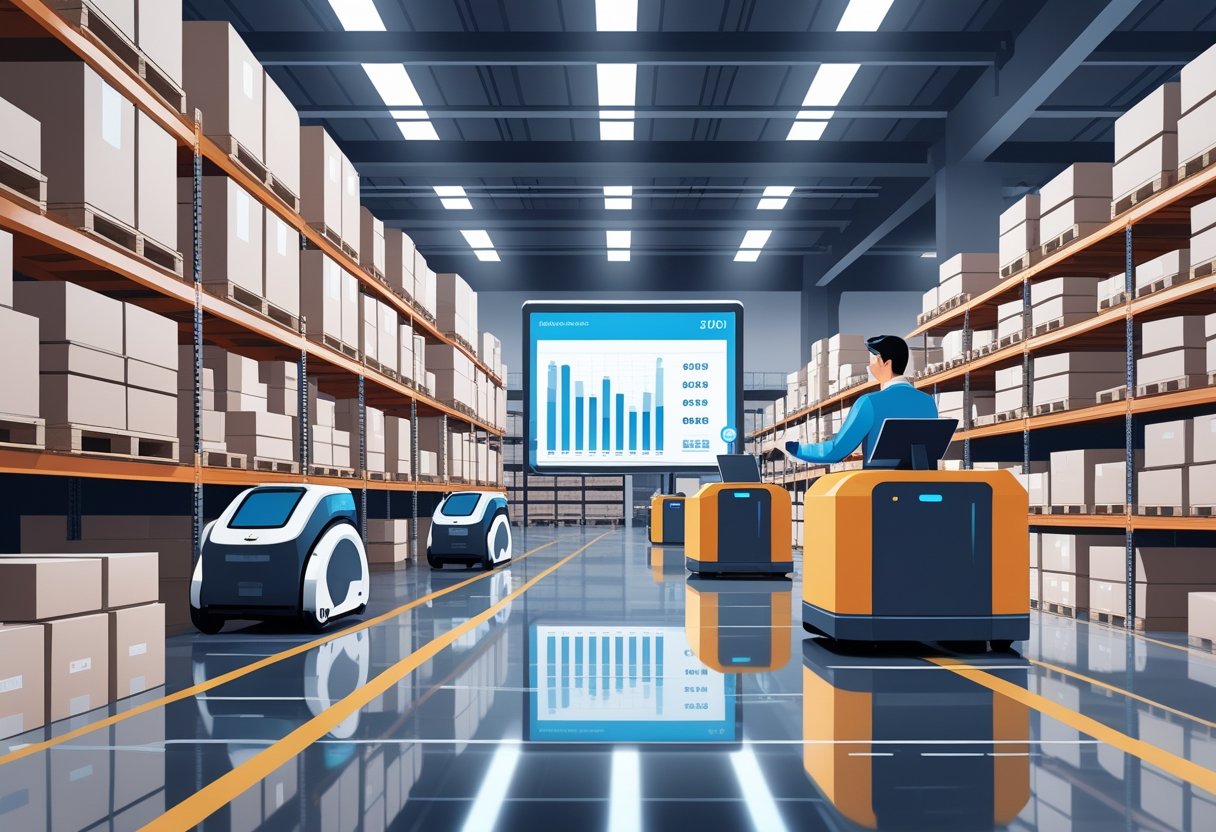
Automation is about more than just robots and conveyor belts. It’s about creating smart, connected systems that reduce manual work and make your entire operation more accurate.
Managing inventory across multiple warehouses
As your brand grows, your customer base will likely spread out across the country, or even the world. When that happens, shipping everything from a single warehouse can become a major bottleneck. It leads to longer delivery times and higher shipping costs, which can be a dealbreaker for customers accustomed to fast, affordable shipping. This is the point where a multi-warehouse strategy becomes a powerful next step. It’s about strategically placing your inventory in different geographic locations to get your products closer to your key customer hubs, turning your logistics from a challenge into a competitive advantage.
Of course, spreading your inventory across multiple locations introduces a new layer of complexity. You need to know not just what you have, but precisely where you have it, all in real time. This is where basic spreadsheets and disconnected systems fall short. To manage a distributed inventory network effectively, you need a centralized system that provides a single, unified view of all your stock. This allows you to make smart decisions about where to stock certain SKUs, how to route orders for the most efficient fulfillment, and how to maintain accurate, auditable financial records for assets spread across multiple facilities.
Benefits of a multi-warehouse strategy
The most immediate benefit of a multi-warehouse strategy is a better experience for your customers. By placing inventory closer to them, you can dramatically reduce shipping costs and delivery times, which is a huge driver of customer satisfaction and repeat business. This approach also builds resilience into your supply chain. If a snowstorm shuts down your warehouse in the Northeast, you can continue fulfilling orders from a location in the Southwest without missing a beat. This ability to maintain business continuity protects your revenue and your brand’s reputation for reliability.
Ultimately, managing inventory across multiple warehouses gives you greater flexibility and control. You can tailor stock levels to match regional demand, preventing stockouts in one area while another is overstocked. This enhanced inventory control means your capital is working more efficiently for you, rather than being tied up in the wrong products in the wrong places. It’s a strategic move that supports faster growth, improves your operational efficiency, and helps you build a more robust and customer-centric business that can compete on speed and service.
How automation improves warehouse efficiency
Automation is about more than just robots and conveyor belts. It’s about creating smart, connected systems that reduce manual work and make your entire operation more accurate. When you automate key warehouse processes, you free up your team from repetitive tasks and minimize the chance of human error, which can be a huge drain on resources. Think of it as building a more resilient and efficient foundation for your business.
Tools like a Warehouse Management System (WMS) and automated storage solutions are central to making this happen. They work together to streamline everything from receiving to shipping. By automating data entry, inventory tracking, and even physical product movement, you get a clearer, real-time picture of what’s happening in your warehouse. This allows you to make better decisions, fill orders faster, and keep your inventory counts precise without needing to triple-check everything by hand. Ultimately, automation helps you build a smoother, more predictable workflow that can scale with your business. It's the difference between reacting to problems and proactively preventing them, ensuring your operations can handle growth without buckling under the pressure.
How automated picking and replenishment can help
Automated picking and replenishment systems are designed to make your fulfillment process faster and more accurate. Instead of having team members walk miles of aisles each day, these systems bring the goods directly to them. Automated storage and retrieval systems (AS/RS), for example, use robots to store and retrieve products, drastically cutting down on travel time.
This not only speeds up order picking but also improves ergonomics and safety for your staff. On the replenishment side, automation ensures that your primary picking locations are always stocked. The system can automatically trigger a restock when inventory hits a certain level, preventing delays and ensuring your pickers always have the products they need right at their fingertips.
The importance of integrating with your ERP and financial systems
The real power of automation comes from connecting your warehouse operations to the rest of your business. Integrating your WMS with an AI-native ERP creates a single source of truth for your inventory data. When a new shipment arrives or an order is sent out, the information is automatically updated across all systems, from your warehouse floor to your financial statements.
This eliminates manual data entry and the risk of costly errors. It gives you real-time visibility into your stock levels, costs, and revenue. With a fully integrated system, you can trust that your financial reports are accurate and that your operational decisions are based on the most current data available.
How to use predictive analytics for better demand forecasting
Guesswork has no place in modern inventory management. Predictive analytics uses AI to analyze historical sales data, market trends, and seasonality to forecast future customer demand with incredible accuracy. These tools help you understand what products will be popular and when, so you can stock the right amount of inventory at the right time.
This data-driven approach helps you avoid stockouts that lead to lost sales and frustrated customers. It also prevents overstocking, which ties up your cash and increases carrying costs. By using predictive tools to guide your purchasing decisions, you can optimize your inventory levels, improve cash flow, and make smarter choices for your business.
How to measure your warehouse inventory success
You can have the most organized warehouse in the world, but if you aren't tracking your performance, you're flying blind. Measuring your success isn't just about crunching numbers; it's about understanding what’s working and where you have room to improve. By focusing on a few key performance indicators (KPIs), you can get a clear, data-backed picture of your warehouse's health. These metrics show you how efficiently you're moving products, how happy your customers are, and how your inventory management directly impacts your bottom line. Think of them as your warehouse's report card, helping you make smarter decisions about everything from purchasing to order fulfillment. Let's look at the essential metrics every physical goods business should be tracking.
Tracking inventory turnover and carrying costs
Your inventory turnover ratio tells you how many times you sell and replace your entire stock over a specific period. A higher number is generally better, as it means products aren't sitting on your shelves collecting dust. This directly ties into your carrying costs, which is the total expense of holding unsold inventory. These costs include storage fees, insurance, labor, and potential losses from damage or obsolescence. Good warehouse management helps you spend less on storage and keeps your supply chain running smoothly. By tracking both turnover and carrying costs, you can strike the right balance between having enough stock to meet demand and avoiding the financial drain of excess inventory.
Measuring order accuracy and fulfillment time
How often do you ship the wrong item? How long does it take for an order to get from your warehouse to your customer's doorstep? These questions are answered by two critical metrics: order accuracy and fulfillment time. A well-organized warehouse means orders are sent out faster and with fewer mistakes, which is fundamental to keeping customers happy. When you know exactly what's in stock and where it is, your team can pick and pack orders quickly and correctly. Tracking these KPIs helps you pinpoint bottlenecks in your fulfillment process and identify training opportunities, ensuring your customers get what they ordered, on time, every time.
Connecting stockout rates to customer satisfaction
Nothing disappoints a customer more than finding out the product they want is out of stock. Your stockout rate measures how often this happens. While a zero percent stockout rate is nearly impossible, keeping it low is crucial for customer retention and protecting your revenue. High stockout rates lead to lost sales and can push loyal customers toward your competitors. Regularly checking your stock levels and using accurate data helps prevent you from accidentally selling items you don't have. Monitoring this metric allows you to refine your forecasting and safety stock levels, ensuring you can consistently meet customer demand without overstocking.
How effective inventory management impacts your bottom line
Think of your warehouse as the heart of your business. When it runs efficiently, it pumps life (and profit) into every other department. Effective warehouse inventory management isn't just about keeping shelves tidy; it's a direct lever you can pull to improve your company's financial health. When you have a solid system in place, you spend less on things like shipping and storage, create a more resilient supply chain, and ultimately, keep your customers happy. It’s the foundation for meeting demand while protecting your margins.
Poor management, on the other hand, can be a silent drain on your resources. It leads to wasted space, excess inventory tying up cash, and high labor costs from inefficient processes. In fact, some experts estimate that strong warehouse management practices can cut operational costs by 20% to 30%. This isn't just about small savings; it's about fundamentally changing your cost structure. By getting a handle on your inventory, you’re not just organizing products, you’re building a more profitable and sustainable business from the ground up. Let's look at exactly how this plays out in your finances, from direct cost savings to stronger cash flow and easier compliance.
Actionable strategies for reducing warehouse costs
One of the most immediate benefits of better inventory management is cost reduction. When you know exactly what you have and where it is, you stop wasting money. This means less capital tied up in overstocked items that might expire or become obsolete, and fewer rush orders for products you didn't realize were running low. You also optimize your storage space, so you aren't paying for a larger warehouse than you actually need.
A modern warehouse inventory management system is key here. By automating tasks like tracking and reordering, you reduce labor costs and minimize the risk of expensive human errors. With real-time, SKU-level data, you can pinpoint slow-moving products, prevent spoilage, and make smarter purchasing decisions that directly cut down on waste and protect your margins.
How to improve your cash flow
Inventory is essentially cash sitting on a shelf. The longer it sits there, the longer that cash is unavailable for other critical business needs like marketing, product development, or payroll. Effective inventory management helps you convert that inventory back into cash more quickly. By optimizing stock levels, you avoid tying up funds in products that aren't selling.
This frees up a significant amount of working capital. Instead of having money locked in slow-moving inventory, you can reinvest it into growing your business. Accurate forecasting, powered by reliable data, allows you to stock just enough to meet demand without going overboard. This balance is the sweet spot for a healthy cash flow, ensuring you can cover expenses and seize new opportunities without being held back by your own inventory.
Staying compliant and recognizing revenue correctly
For any business selling physical goods, accurate inventory data is non-negotiable for financial reporting. Your inventory valuation directly impacts your cost of goods sold (COGS) and, ultimately, your profitability. To stay compliant with accounting standards like GAAP, you need a clear and auditable record of your inventory from the moment it arrives to the moment it ships.
This is where a robust system becomes essential. It provides the transaction-level accuracy needed for proper revenue recognition and financial audits. A good inventory management plan ensures that every movement is tracked, creating a reliable paper trail. This not only keeps your books clean and compliant but also gives you, your investors, and your stakeholders confidence in your financial statements.
Related articles
- Why Month-End Close Shouldn’t Exist
- What “AI-Native ERP” Actually Means (And What It Doesn’t)
- Spreadsheets, IMS, or ERP? The Architecture Question Most Brands Miss
- SKU-Level Economics: What Your Gross Margin Isn’t Telling You
- Landed Costs: Not Just Another Financial Metric
Frequently asked questions
What’s the first practical step I can take to improve my warehouse management?
Start with a deep clean and organization of your physical space. Before you invest in any new technology, get a clear picture of what you have and where it lives. Group similar items together, label your aisles and bins clearly, and create defined zones for receiving, storage, and packing. This physical reset makes it much easier to implement new processes like cycle counting and will immediately improve your team's efficiency.
Is warehouse automation only for huge companies with massive budgets?
Not at all. Automation exists on a spectrum, and you don't need a fleet of robots to get started. Implementing barcode scanners to reduce manual entry errors is a powerful and accessible form of automation. Using a cloud-based system to track inventory in real time is also automation. The goal is to start by identifying your most repetitive, error-prone tasks and finding a tech solution that fits your current scale.
How is a Warehouse Management System (WMS) different from an ERP?
Think of a WMS as a specialist and an ERP as a generalist that connects all the specialists. A WMS is hyper-focused on optimizing the day-to-day physical operations within your warehouse walls, like picking routes and storage locations. An ERP (Enterprise Resource Planning) system links your warehouse operations to every other part of your business, including finance, sales, and purchasing. A modern ERP can incorporate WMS functions while also giving you a complete financial picture tied to every single SKU.
How often should my team be doing cycle counts?
The ideal frequency depends on the product, so you don't need to count everything at the same rate. A great approach is to use the ABC analysis mentioned in the post. Your 'A' items, which are your fast-moving top sellers, should be counted most frequently, perhaps weekly or even daily. Your slower-moving 'C' items might only need to be counted once a quarter. This targeted method keeps your most important inventory accurate without overwhelming your team.
My inventory numbers never seem to match my financial reports. Why does this happen?
This is a very common problem, and it usually happens when your operational systems and financial systems don't talk to each other. Delays in data entry, unrecorded damages, or returns that aren't processed correctly can all create discrepancies between what's on the shelf and what's on the books. The solution is a single, integrated system where every physical inventory movement automatically updates your financial records in real time, ensuring your reports always reflect reality.
.png)
.png)